All Things Being Equal
An on-line journal exploring society, culture, and politics through an egalitarian lens.
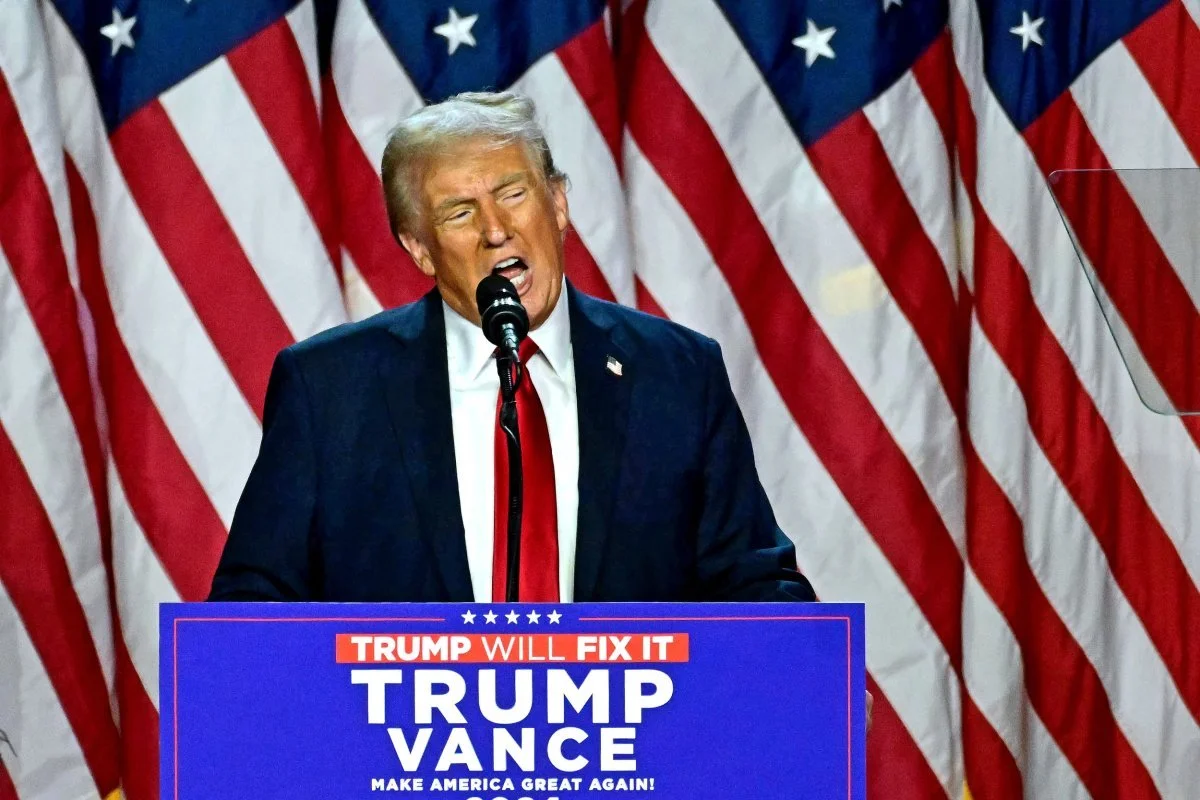
Denying the economic experiences struggling Americans are relating as well as the data telling the story of rising prices and stagnant wage growth, Donald Trump called the now politically central issue of affordability a “Democrat scam.”
Not only has Trump basically turned a blind eye to the economic hardships Americans are suffering, even worse, it seems like practically every day he and his Republican allies pursue some measure to make the affordability crisis even worse, evidencing his unrelenting attack on Americans’ economic well-being.
Baldwin boils down any political or moral menu to its most basic element: the need, the imperative, to take care of and do right by the world’s children. Think about it. What if we assessed any political policy or behavior in terms of whether it affirmed and supported the lives and well-being of our children domestically and globally?
The question really takes politics and ideology out of the equation and roots our deliberations and evaluations in a simple moral criterion. Are we feeding and providing for the health of our children? Are we educating them and providing the means and opportunity for them to fully develop their talents so they can share them, give them back, to our society? Are they housed and safe? Are their environments healthy and properly-stewarded?
Trump is not correcting a trade imbalance; he’s creating one to the detriment of not just U.S. businesses and the U.S. economy but to the material lives of Americans living in that economy who will bear the brunt of the lack of job creation, possible layoffs, obstacles growing their businesses and more. And it never helps to have hostility with a nation on your border.
It’s hard to see how Trump is putting America first with these tariffs.
Trump promised during his campaign to address inflation and lower costs for Americans, particularly food and energy costs. Yet if he really wished to honor this promise, he would be advocating for swift and substantial support for Ukraine and playing hardball with Russian President Vladimir Putin, instead of swooning in his autocratic bro-mance with him.
Let’s think about it. Putin’s invasion of the Ukraine is and has been a key cause of rising oil and gas prices, of energy costs overall, and thus of the surging prices for all goods and services. Most things we buy–groceries, clothing, etc–have to be transported via boat, plane, or truck, so rising fuel prices make the cost of just about everything rise.
News and Analysis Archive
Americans need to own what they are sanctioning and have historically sanctioned and not have the luxury of denying the reality of the moral monstrousness of our national behavior.
Put most simply, in a nation that has long sought to distinguish itself by its aspirational values of equality and liberty, we find ourselves as a nation engaging in a behavior of determining which Americans deserve to face discrimination and violence.
Against which Americans can we discriminate in this nation? Upon which Americans can we inflict violence with impunity? Who can get raped without consequence for the rapist?
Of course, true scientific practice would record and recognize all the forms of life we see occurring in nature, not deny or dismiss them. It is culturally prejudicial norms that term intersex children as aberrant or abnormal. It is here we need poetry to de-familiarize and bring us beyond imprisoning linguistic and cultural norms, which is precisely its function.
This is both a rare opportunity and a rare film. It is, as the reviewer in Variety says, “…sensitive, modest, a story so small it could be contained in a teardrop…” Surprisingly, at this time in our raucous political culture, it holds itself apart by its remarkable thoughtfulness and empathy.
In a virtual interview following the showing of “Megalopolis,” Francis Ford Coppola spoke with the audience about what he had hoped to address with his film. “Like Ancient Rome, we are in danger of losing our Republic. How do we get out of this?” he asked. “We have to [somehow] leap over patriarchy,” was his suggestion, “because patriarchy is going nowhere.” He cited the work of Riane Eisler, “The Chalice and The Blade,” in which she looks at the work of Marija Gimbutas, a cultural and linguistic anthropologist who examined ancient Indo-European societies and found that a large percentage were matriarchal and consisted of more democratic, peaceful, and egalitarian structures than the social systems based on male domination.
Culture and Politics Archive
While the film 9 to 5 may have had a utopian dimension, there was nothing impractical or fantastic about it. The vision of a workplace free from sexism and exploitation that recognizes people’s humanity and dignity and allows them to share in the fruits of their labor should not be considered a pipe dream.
It sounds like a baseline benchmark for any society that wants to call itself civilized.
The players of the WNBA seemed to agree, and for them the vision portrayed in 9 to 5 was hardly a utopian fantasy. Led by star players Napheesa Collier and Breanna Stewart, the players formed Unrivaled, an alternative three-on-three league whose season ran between the end and beginning on the WNBA season. The economics and organization of the league provided a corrective to everything players complained about with the WNBA and realized a world much like 9 to 5 imagines. League facilities included childcare, chefs and nutritionists for the players, trainers, and more. The minimum salary of over $200,000 was nearly triple that of the WNBA, and the players enjoyed revenue-sharing on top of that.
So the question we should be asking isn’t really whether or not a college education is worth it; rather, we need to ask:
Can we really afford to have Americans not pursue a college education to develop the skills, knowledge, and imaginations—and do the research—necessary for a successful society and economy that meets our needs and supports our lives, materially, spiritually, and otherwise?
So, the question is, if we cannot afford NOT to have a college-educated population, how do we make college affordable?
The more federal administrations surrender our ownership of the country to private interests, the more un-egalitarian our society becomes and the less control we the people have over resources and hence the more power we give up. We become dependent on, or at the mercy of, private corporations.
If we want affordability, if we want an economy that works for all, we need public ownership, not privatization.
This bill, which Trump signed into law on July 4, suggesting it bore some relation to the nation’s historical quest for a sovereignty characterized by freedom, rooted in the principle that all people are created equal, and insistent on a non-tyrannical political order, actually positions itself in direct opposition, complete contradiction, to the values informing the founding of the nation.
In the Declaration of Independence, our founders were insistent that we all enjoyed certain inalienable rights that included “life, liberty, and the pursuit of happiness.” This bill is aggressively hostile to American life.
The Constitution states that “we the people” were establishing that very Constitution to “form a more perfect union” and “promote the general welfare,” among other objectives.
Features and Essays Archive